Why Goals Need a Physical Anchor
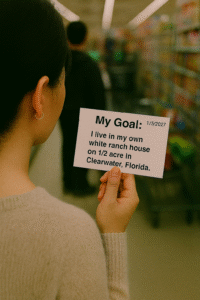 In a culture obsessed with productivity apps, vision boards, and digital dashboards, the goal card offers something radically simple: a single, tangible declaration of intent. It’s not a to-do list. It’s not a wish. It’s a ritualized statement of who you are becoming.
A goal card is a small, portable artifact that holds one clear goal written in present tense—as if already achieved. It’s designed to be read daily, carried with you, and treated as a rehearsal of reality. Whether you’re seeking emotional clarity, financial stability, creative fulfillment, or a new chapter in life, the goal card becomes your anchor.
This isn’t about hustle. It’s about congruence. It’s about choosing one goal that matters and letting it shape your decisions, your rituals, and your identity.
What Is a Goal Card?
A goal card is a physical or digital card that contains one clearly defined goal written in present tense. It’s not a list of tasks. It’s a declaration. A rehearsal. A symbolic contract with your future self.
Core Elements
- One goal per card: Simplicity is power. Each card holds one intention.
- Present-tense language: “I live in a home that feels peaceful and inspiring” vs. “I want to live…”
- Emotional resonance: Include how it feels—“I feel calm, creative, and safe.”
- Daily repetition: Read it aloud. Carry it. Post it. Let it become part of your rhythm.
You can create your own goal card at themoneychi.com/goalcard.html—a simple, free tool that helps you ritualize your intention.
Why It Works: The Psychology Behind Goal Cards
🧠 Rewiring the Subconscious
Writing your goal in present tense and reading it daily activates your reticular activating system (RAS)—the part of your brain that filters information and focuses your attention. When you rehearse your goal, your brain starts looking for ways to make it real.
Studies show that people who write down their goals are significantly more likely to achieve them. The goal card amplifies this effect by layering repetition, emotional engagement, and physical presence.
🔥 Emotional Anchoring
Reading your goal aloud creates a somatic imprint. It’s not just mental—it’s embodied. The act of speaking your goal, feeling its truth, and visualizing its impact turns abstract ambition into emotional architecture.
🎯 Strategic Focus
By limiting each card to one goal, you eliminate distraction and fragmentation. Your energy becomes directional. Your decisions become congruent. Your rituals become rehearsals of success.
📈 Measurable Progress
Unlike vague affirmations, a goal card is specific. It’s trackable. You can measure progress, celebrate wins, and ritualize closure when the goal is complete.
Who Has Promoted the Goal Card?
📚 Bob Proctor
Bob Proctor, a legendary figure in personal development, popularized the goal card as a daily ritual. His method involves writing a single, emotionally charged goal on a card and reading it multiple times a day.
“Write your goal on a card. Carry it with you. Read it often. Let it become part of you.” —Bob Proctor
🧘 Napoleon Hill (Indirect Influence)
In Think and Grow Rich, Hill emphasized the power of definiteness of purpose, emotional desire, and daily repetition. While he didn’t use the term “goal card,” his teachings laid the philosophical foundation.
🧠 Modern Coaches and Strategists
Today, goal cards are used by business coaches, therapists, and performance psychologists. They’ve been adapted into digital formats, apps, and team rituals—but the core remains: clarity, repetition, and emotional resonance.
Examples of Success Using Goal Cards
🏡 Relocation and Sanctuary
A woman seeking a peaceful home wrote: “I live in a quiet, sunlit space near water, where I feel safe and inspired.” She read it daily, filtered her housing search through it, and eventually moved into a home that matched her vision.
💼 Career Clarity
A man in a career transition wrote: “I work in a role that honors my creativity and pays me well.” Within months, he shifted industries, landed a new job, and felt more aligned than ever.
🧘♂️ Somatic Healing
Someone recovering from chronic stress wrote: “I move with ease and breathe clarity into my body.” Paired with breathwork and micro-check-ins, the goal card became a map of healing.
📚 Academic Achievement
A student wrote: “I study with focus and pass my exams with confidence.” The card helped her stay grounded, reduce anxiety, and improve performance.
How to Create and Use a Goal Card Effectively
1. Choose the Right Format
- Index card: Portable, tactile, easy to carry.
- Sticky note: Great for mirrors, monitors, or dashboards.
- Digital card: Use your phone wallpaper or create one at themoneychi.com/goalcard.html.
2. Write in Present Tense
Use language that affirms the goal as already achieved. This activates the subconscious and aligns your identity with the outcome.
“I live in a peaceful home that supports my creativity.”
3. Add Emotional Resonance
Include how the goal makes you feel. This creates a somatic anchor and amplifies motivation.
“I feel calm, inspired, and free.”
4. Read It Daily
Make it a ritual. Morning, midday, and evening. Speak it aloud. Feel it. Visualize it.
5. Pair It with Action
The goal card is not magic—it’s a rehearsal. Pair it with strategic action, feedback loops, and course correction.
6. Archive and Annotate
Keep old goal cards. Annotate them. Celebrate wins. Ritualize closure. This builds a legacy map of your evolution.
Templates and Variations
🧭 Traditional Model
- One goal
- Present tense
- Emotional resonance
- Daily repetition
🎨 Thematic Model
- Color-coded cards for different life areas (home, career, health, relationships)
- Each card has its own ritual
🕰 Chronological Model
- Cards for daily, weekly, monthly, and annual goals
- Layered with timestamps and closure rituals
Common Mistakes to Avoid
- Too many goals on one card: Dilutes focus.
- Vague language: “I want to be successful” is not a goal.
- Skipping repetition: The magic is in the daily rehearsal.
- No emotional anchor: Without feeling, the goal is hollow.
Goal Cards in Business and Teams
For teams and organizations, goal cards can be used to:
- Align quarterly goals
- Motivate performance
- Create visual dashboards of progress
- Foster emotional engagement with company vision
Use physical boards or shared documents to display team goal cards. Celebrate wins with symbolic rituals—confetti, stamps, or shared reflections.
Goal Cards as Legacy Fragments
For those who treat life as a ritual of becoming, goal cards are more than productivity tools. They are fragments of legacy. Each card is a timestamp of intention, a rehearsal of identity, and a closure artifact.
Archive them. Annotate them. Frame them. Let them become part of your story.
Sample Goal Card Ritual
Card:
“I live in a peaceful home near water, where I feel safe and inspired.”
Ritual:
- Morning: Read aloud while stretching
- Midday: Visualize the space
- Evening: Reflect on progress
- Weekly: Archive old cards, create new ones if needed
Final Thoughts: One Card, One Goal, One Ritual
The goal card is deceptively simple. But its power lies in repetition, clarity, and emotional resonance. It’s how you declare your intention, rehearse your reality, and build a life that feels congruent.
Start with one card. One goal. One ritual. Let it become your rehearsal of reality.
You can create your own goal card today at themoneychi.com/goalcard.html. Choose a goal that matters. Write it in present tense. Read it daily. Watch your life begin to shift.