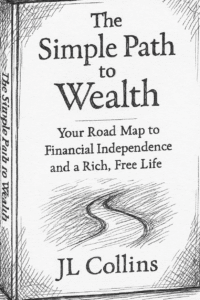
 When it comes to personal finance, few books have achieved the cult-like status of JL Collins’ The Simple Path to Wealth. Originally written as a series of letters to his daughter, the book has become a cornerstone of the financial independence movement. Its appeal lies in its clarity: Collins strips away the jargon, the hype, and the endless complexity that often surrounds investing, and instead offers a straightforward roadmap to financial freedom.
At its heart, The Simple Path to Wealth is not about getting rich quickly. It’s about building a life of independence, security, and choice. Collins’ philosophy is simple: spend less than you earn, avoid debt, invest the surplus in low-cost index funds, and let time do the rest. While this may sound almost too easy, the brilliance of the book lies in how convincingly Collins explains why this approach works—and why most alternatives fail.
The Power of Simplicity
One of the most striking aspects of Collins’ writing is his insistence that investing doesn’t need to be complicated. In fact, complexity is often the enemy of success. Wall Street thrives on selling products, strategies, and services that promise to beat the market, but Collins argues that these are traps designed to enrich financial institutions, not investors.
Instead, he champions broad-market index funds, particularly Vanguard’s Total Stock Market Index Fund (VTSAX). By investing in the entire market, you avoid the risks of stock-picking and benefit from the long-term upward trajectory of the economy. Over decades, the market has consistently grown, despite short-term volatility. Collins’ advice is to ride that wave patiently, without trying to outsmart it.
This simplicity is liberating. For beginners, it removes the fear of making mistakes with complex strategies. For seasoned investors, it’s a reminder that chasing returns often leads to disappointment. The “simple path” is not only effective—it’s stress-free.
F-You Money: Freedom Through Wealth
One of Collins’ most memorable contributions to the personal finance lexicon is the concept of “F-You Money.” This is the point at which you have enough savings and investments to walk away from a job, a boss, or a situation that doesn’t serve you. It doesn’t necessarily mean full retirement; rather, it means freedom.
Collins emphasizes that money is not an end in itself. It’s a tool to buy independence. Having F-You Money allows you to live life on your own terms, whether that means pursuing passion projects, traveling, or simply refusing to tolerate toxic work environments. In this sense, The Simple Path to Wealth is not just about financial mechanics—it’s about reclaiming control over your life.
Avoiding Debt and Wall Street Traps
Collins is blunt about the dangers of debt. Credit card balances, car loans, and other high-interest obligations are wealth destroyers. His advice is to avoid them entirely, or pay them off as quickly as possible. Debt not only drains your finances but also limits your freedom, tethering you to obligations that restrict your choices.
Equally dangerous are the traps set by Wall Street. High-fee mutual funds, actively managed portfolios, and financial advisors who promise to beat the market are, in Collins’ view, wolves in sheep’s clothing. The fees they charge may seem small, but over decades they erode enormous amounts of wealth. By sticking to low-cost index funds, you keep more of your money working for you.
The Role of Patience
If there’s one virtue that The Simple Path to Wealth demands, it’s patience. Collins reminds readers that markets will fluctuate, sometimes violently. There will be crashes, recessions, and bear markets. But history shows that markets recover, and those who stay the course are rewarded.
This long-term perspective is crucial. Many investors panic during downturns and sell at the worst possible time. Collins urges readers to resist this impulse. By maintaining discipline and continuing to invest regularly, you harness the power of compounding. Over decades, even modest contributions grow into substantial wealth.
Who Should Read This Book?
While The Simple Path to Wealth is accessible to anyone, it’s particularly valuable for three groups:
- Beginners: The book demystifies investing, making it approachable for those who feel overwhelmed by financial jargon.
- DIY Investors: For people who want to manage their own money without paying advisors, Collins provides a clear, actionable plan.
- FIRE Enthusiasts: The Financial Independence, Retire Early (FIRE) community has embraced the book as a foundational text. Its emphasis on frugality, investing, and freedom aligns perfectly with the movement’s goals.
Beyond Money: A Philosophy of Life
Perhaps the most compelling aspect of Collins’ work is that it’s not just about money. It’s about life. He repeatedly stresses that wealth is not the ultimate goal—freedom is. Money is a means to an end, and that end is the ability to live according to your values.
This perspective resonates deeply in a world where many people feel trapped by jobs, debt, and consumer culture. Collins offers an alternative vision: a life where money serves you, rather than the other way around. It’s a philosophy that blends financial wisdom with personal empowerment.
Key Takeaway
JL Collins boils investing down to one mantra:
“Spend less than you earn, invest the surplus, avoid debt, and do it for a long time.”
That’s the simple path he describes. It may not be glamorous, but it works. And in a financial landscape filled with noise, complexity, and false promises, Collins’ voice is refreshingly clear.
Final Thoughts
The Simple Path to Wealth is more than a book about investing—it’s a guide to living a life of independence. Its lessons are timeless: simplicity beats complexity, patience beats panic, and freedom beats accumulation. Whether you’re just starting your financial journey or reevaluating your approach, Collins’ wisdom offers a reliable compass.
In the end, the book’s greatest gift is perspective. It reminds us that money is not the goal—it’s the tool. And when used wisely, that tool can build a life of choice, security, and fulfillment. That’s the true wealth Collins wants his readers to achieve.