🌊 Introduction: Beyond the Crisis Narrative
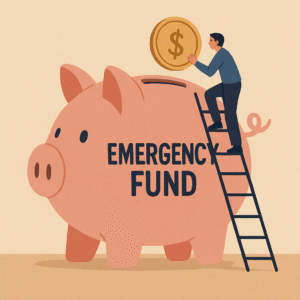 The term emergency fund often conjures images of broken-down cars, sudden layoffs, or medical bills. It’s framed as a reactive tool—a financial fire extinguisher for when life combusts. But for those of us designing lives with intention, rhythm, and emotional congruence, the emergency fund deserves a deeper role. It is not merely a buffer against chaos; it is a container for sovereignty, a permission slip for risk, and a quiet sanctuary for creative expansion.
What if we reframed the emergency fund as a ritual of emotional anchoring—a system that holds space for both repair and reinvention? What if its true value wasn’t just in dollars, but in the psychological spaciousness it creates?
Let’s explore.
🛡️ Part I: The Emotional Architecture of Financial Safety
1. Safety as a Design Principle
Safety is not the absence of danger—it’s the presence of agency. In financial terms, this means having the ability to respond, pivot, and protect your rhythm without panic. An emergency fund becomes the emotional firewall between you and reactive decision-making.
- It allows you to say “no” to misaligned opportunities.
- It gives you time to recalibrate after a rupture.
- It preserves your creative bandwidth when life demands logistical triage.
2. Anchoring vs. Escaping
Many financial systems are built around escape: escape from debt, escape from scarcity, escape from obligation. But anchoring is different. Anchoring says, I trust myself to stay. I trust my rhythm, my rituals, my sanctuary. An emergency fund, when designed with intention, becomes a symbol of that trust.
It’s not just “money in a savings account.” It’s a container for your future self’s clarity.
🧭 Part II: Reimagining the Purpose of the Emergency Fund
3. From Crisis Response to Creative Risk
Traditional advice says: save 3–6 months of expenses in case of job loss. But what if your emergency isn’t a job loss—it’s a creative calling that demands a sabbatical? What if the rupture isn’t external, but internal—a misalignment that must be honored?
Your emergency fund should be able to fund:
- A relocation to a coastal, artistic community.
- A pause in client work to rebuild your site or ritual systems.
- A retreat to recalibrate your emotional architecture.
In this reframing, the emergency fund becomes a launchpad, not just a parachute.
4. Peace of Mind Has a Price Tag
Let’s get blunt: peace of mind costs money. Not because it’s transactional, but because it’s spatial. Spaciousness requires slack in the system. And slack requires funding.
Ask yourself:
- What does one month of full creative freedom cost?
- What’s the price of saying “no” for 90 days while you rebuild your sanctuary?
- What’s the cost of staying emotionally congruent in the face of misaligned demands?
Your emergency fund should be designed to purchase that peace.
📐 Part III: Designing the Fund with Emotional Precision
5. The Emotional Audit
Before you calculate numbers, conduct an emotional audit. Ask:
- What types of emergencies have historically disrupted my rhythm?
- What emotional states do I want to protect during those times?
- What rituals do I need to preserve even in crisis?
This audit helps you define the true scope of your emergency fund—not just in dollars, but in emotional coverage.
6. Tiered Buffering: The Three-Layer System
Let’s build a layered emergency fund that reflects emotional nuance:
| Layer | Purpose | Emotional Role | Example Amount |
|---|---|---|---|
| Core Buffer | Basic survival (food, shelter, utilities) | Safety | 3 months of essential expenses |
| Creative Buffer | Time to pivot, pause, or rebuild | Spaciousness | 1–2 months of full creative freedom |
| Sanctuary Buffer | Funding relocation, retreat, or reinvention | Sovereignty | Variable—based on your sanctuary vision |
This layered approach ensures that your fund isn’t just reactive—it’s strategically expansive.
🧮 Part IV: Funding the Buffer Without Diluting the Soul
7. Quiet Income Streams
Emergency funds should be fed by quiet income streams—systems that earn without demanding emotional compromise. These might include:
- Affiliate revenue from aligned tools.
- Digital products that honor your legacy.
- Retainers from clients who respect your rhythm.
The goal is to fund your buffer without betraying your creative lineage.
8. Automated Rituals, Not Just Transfers
Set up automatic transfers, yes—but ritualize them. Each deposit into your emergency fund should feel like a vote for your future clarity.
Ideas:
- Name the account something sacred: Sanctuary Buffer, Creative Sovereignty, Legacy Anchor.
- Pair the transfer with a ritual—light a candle, play a song, write a line of poetry.
- Track emotional ROI, not just financial growth.
This transforms saving from a chore into a sacred act of stewardship.
🧱 Part V: Emotional ROI and Strategic Leverage
9. Measuring Emotional Return
Traditional finance measures ROI in percentages. But emotional ROI asks:
- Did this buffer allow me to stay congruent?
- Did it prevent panic-based decisions?
- Did it preserve my creative bandwidth?
Track these outcomes. Journal them. Let your emergency fund become a living archive of resilience.
10. Leverage Without Extraction
Once your buffer is built, you can use it strategically:
- Negotiate from a place of power.
- Decline misaligned work without fear.
- Take sabbaticals to rebuild your systems.
This is leverage without extraction—using your fund to expand your agency, not just survive.
🌀 Part VI: Rituals for Maintenance and Expansion
11. Quarterly Buffer Review
Every quarter, revisit your fund:
- Is it still aligned with your emotional needs?
- Has your sanctuary vision evolved?
- Are your income streams still congruent?
Refine the layers. Adjust the targets. Let the fund evolve with you.
12. Emergency Fund as a Legacy Tool
Eventually, your buffer becomes more than personal—it becomes intergenerational. You can:
- Teach others how to build emotionally congruent buffers.
- Use it to fund community repair or artistic sanctuaries.
- Document your system as part of your creative lineage.
This is how the emergency fund becomes a legacy tool, not just a financial one.
🌅 Conclusion: Anchoring the Future
The emergency fund is not just a savings account—it’s a container for emotional clarity, a ritual of readiness, and a symbol of sovereignty. When designed with intention, it becomes a buffer not just against crisis, but for creativity, sanctuary, and strategic reinvention.
So ask yourself:
- What does peace of mind cost in your ecosystem?
- What emotional states deserve protection?
- What rituals must remain intact, even in rupture?
Then build the buffer that honors those answers. Not just to survive—but to stay congruent, expand your agency, and anchor your future.