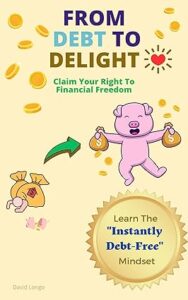
 Debt is one of the most universal challenges of modern life. It creeps into households through credit cards, medical bills, student loans, or unexpected emergencies, and often brings with it more than just financial strain. The emotional weight—anxiety, shame, despair—can feel heavier than the numbers themselves. Yet, as From Debt to Delight reminds us, debt does not have to define your future. It can become the very threshold through which you reclaim agency, confidence, and hope.
This book positions itself not as a dry financial manual, but as an encouraging companion for those who feel trapped. Its message is simple yet profound: you already possess the power to transform your relationship with debt, and you can begin that transformation today. Let’s explore the lessons embedded in its pages and how they can reshape the way we think about financial struggle.
🌑 The Emotional Landscape of Debt
Before diving into strategies, From Debt to Delight acknowledges the emotional terrain. Debt is rarely just about numbers; it’s about identity, self-worth, and the stories we tell ourselves. Many people internalize debt as failure, carrying shame that prevents them from taking action. The book reframes this narrative:
- Past mistakes are not permanent prisons. Debt may be the result of choices or circumstances, but it is not a life sentence.
- Despair is optional. While debt can feel overwhelming, the emotional spiral is not inevitable. You can choose confidence over despair.
- Agency begins in perspective. The first step is not paying off the balance—it’s reclaiming the belief that you are capable of change.
By addressing the emotional side first, the book clears the fog of shame and fear, making space for practical action.
🌱 A Practical Financial Makeover
The heart of From Debt to Delight lies in its promise of a “positive financial makeover starting today.” Unlike complex financial textbooks, it offers accessible steps that anyone can begin immediately. The lessons include:
- Put your situation into perspective. Debt feels infinite when viewed in isolation. By mapping out the numbers clearly, you shrink the monster into something manageable.
- Focus on control, not perfection. You don’t need to eliminate debt overnight. What matters is regaining a sense of control over your finances.
- Celebrate progress early. The book emphasizes that you can see the light at the end of the tunnel long before the debt disappears. Small wins matter.
- Anchor confidence in daily action. Even modest steps—like tracking expenses or setting aside a small payment—become rituals of empowerment.
This approach is practical but also deeply psychological. It teaches that the act of doing something shifts despair into delight, even if the numbers haven’t yet changed dramatically.
🔑 The Power Within
One of the most encouraging themes is the insistence that the ability to overcome debt already exists within you. This isn’t about waiting for external rescue or luck. It’s about recognizing your own capacity:
- You are not powerless. Debt can make people feel trapped, but the book reframes it as a challenge you are equipped to meet.
- Confidence precedes freedom. You don’t have to wait until the debt is gone to feel relief. Confidence comes from knowing you are actively handling it.
- Delight is a choice. Even in the midst of repayment, you can choose to experience joy in progress, gratitude in discipline, and pride in resilience.
This message resonates because it shifts the focus from external circumstances to internal agency. Debt is no longer a cage; it becomes a proving ground for strength.
🌟 Seeing the Light Before Liberation
Perhaps the most distinctive lesson of From Debt to Delight is its insistence that you can see the light at the end of the tunnel long before the debt disappears. This is radical because most financial advice frames relief as something that comes only after the last payment. Instead, the book teaches:
- Relief is psychological, not numerical. The moment you feel in control, the burden lightens—even if the balance remains.
- Progress is delight. Each payment, each choice to avoid unnecessary spending, each act of discipline is a victory worth celebrating.
- Hope is practical. By reframing debt as a journey with visible milestones, you cultivate hope that is grounded in action.
This lesson transforms debt management from a grim march into a hopeful pilgrimage. Delight becomes possible even in the midst of repayment.
🧭 How It Complements Timeless Wealth Lessons
When paired with classics like The Richest Man in Babylon, From Debt to Delight fills an important gap. Babylon teaches timeless principles of wealth—save, invest, protect—but it assumes a baseline of financial stability. For those already burdened by debt, those principles can feel out of reach. From Debt to Delight bridges the gap:
- Step 1: Heal the emotional wound. Reclaim confidence and perspective.
- Step 2: Establish control. Begin practical steps to manage debt.
- Step 3: Transition to wealth-building. Once stability is regained, apply Babylon’s principles to grow prosperity.
Together, the two books form a holistic framework: one for emotional resilience in debt, the other for disciplined wealth creation.
✨ A Ritual of Transformation
Beyond its financial advice, From Debt to Delight can be read as a ritual manual for sovereignty. Each step—perspective, control, confidence, delight—is a threshold. By crossing them, you reclaim agency not just over money, but over your life. Imagine treating each payment not as loss, but as a ritual gesture of freedom. Imagine reframing budgeting not as restriction, but as a daily act of sovereignty. In this way, debt becomes compost for delight.
📌 Practical Takeaways
For readers seeking immediate application, here are distilled practices inspired by the book:
- Audit your debt. Write down every balance. Clarity shrinks fear.
- Choose one small action today. Pay a little extra, track one expense, or cut one unnecessary purchase.
- Celebrate progress. Mark milestones, no matter how small.
- Reframe mistakes. Past errors are lessons, not prisons.
- Anchor confidence. Remind yourself daily: you are capable, you are in control, you are moving forward.
🌞 Conclusion: From Despair to Delight
Debt is heavy, but despair is heavier. From Debt to Delight offers a way to shed that emotional weight long before the numbers vanish. It reframes debt as a journey of empowerment, teaching that confidence and delight are available now, not someday. By shifting perspective, taking practical steps, and celebrating progress, you transform debt from a source of despair into a threshold of sovereignty.
In the end, the book’s promise is simple yet profound: you can reclaim joy even in the midst of financial struggle. Debt may linger, but delight can begin today.